-
Avoiding Agile Must-Dos
3–4 minutes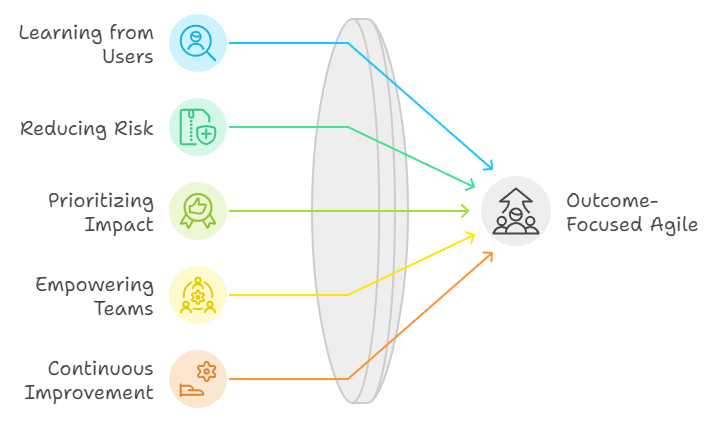
I’ve worked with a few organizations so heavily focused on the operational aspects of Agile that they only thought of Agile as a set of practices teams had to follow and where doing good Agile meant completing projects successfully. At companies with that perspective, instead of describing qualities like adaptability and quickness, Agile becomes a
-
Making Progress Through Questions
4–6 minutes
An Agile Coach’s job is to help teams grow and enhance their effectiveness. Rather than push practices, give answers, or do the team’s work for them, coaches can help teams increase their effectiveness by paying attention to the quality of conversations and the flow of information in their work. Two ways Agile Coaches can improve
-

As an Agile Coach, people occasionally ask me for help introducing agile to their teams. When asked these questions in the past, the approach I used to take was to dive deeper into the team’s intent and goals. Instead of pushing practices or tools, I would ask them what they were trying to achieve with
-
Drift to Waterfall
4–6 minutes
A typical scenario I encounter with teams that want to be more agile is when they slowly start slipping into more Waterfall ways of working. This drift to waterfall happens when the solutions teams come up with to solve their problems and end up negatively impacting the team’s agility and adaptability. Let’s look at some real-life examples that illustrate
-
One-Time Efforts
3–5 minutes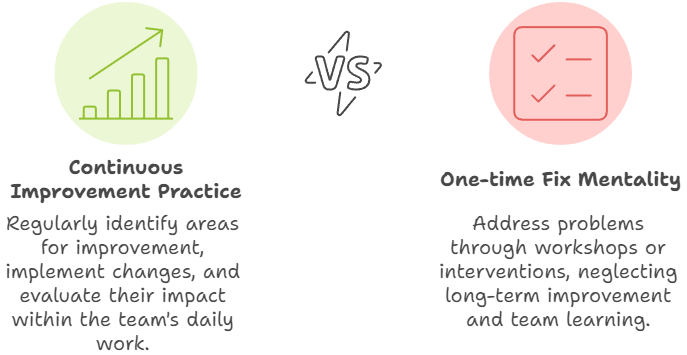
Organizations and teams constantly deal with endless problems during their work. Maybe it’s due to some natural, instinctual way humans react to problems, but the typical response I see teams take is to try to fix them with what I call “One-time efforts.” While appealing, one-time efforts are not well-suited to the complex problems teams
-
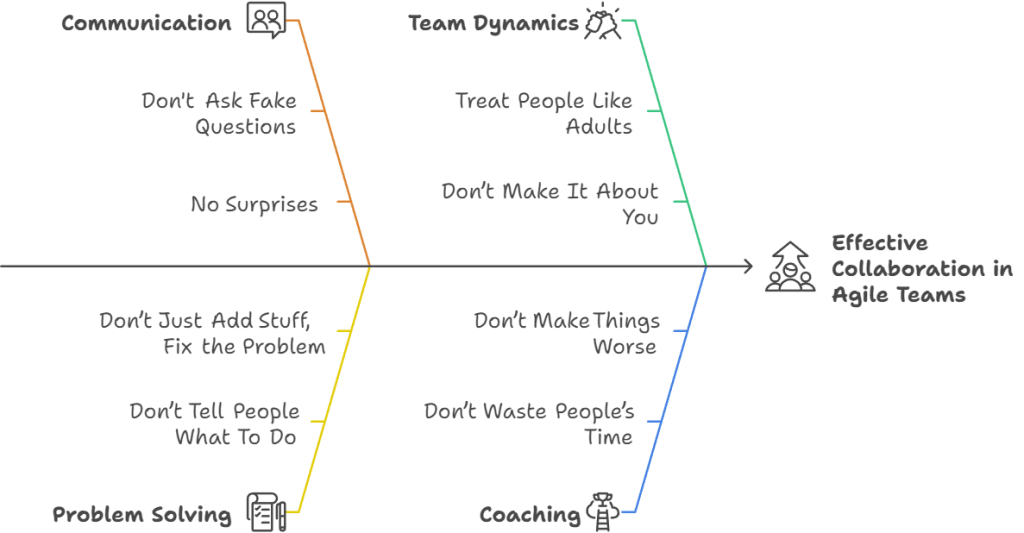
In my time working with different teams and organizations, I’ve found myself repeating certain lessons that have proven consistently effective at helping improve how teams work together. I’ve started calling these my “Golden Rules.” These are principles that I teach to the teams and leaders I coach and that I also try to follow in
 Flow Focused